
Press transfer simulation
We simulate the press transfer before the die is built: finger pick-up, motion, interference and stroke rate, using your press and transfer data.
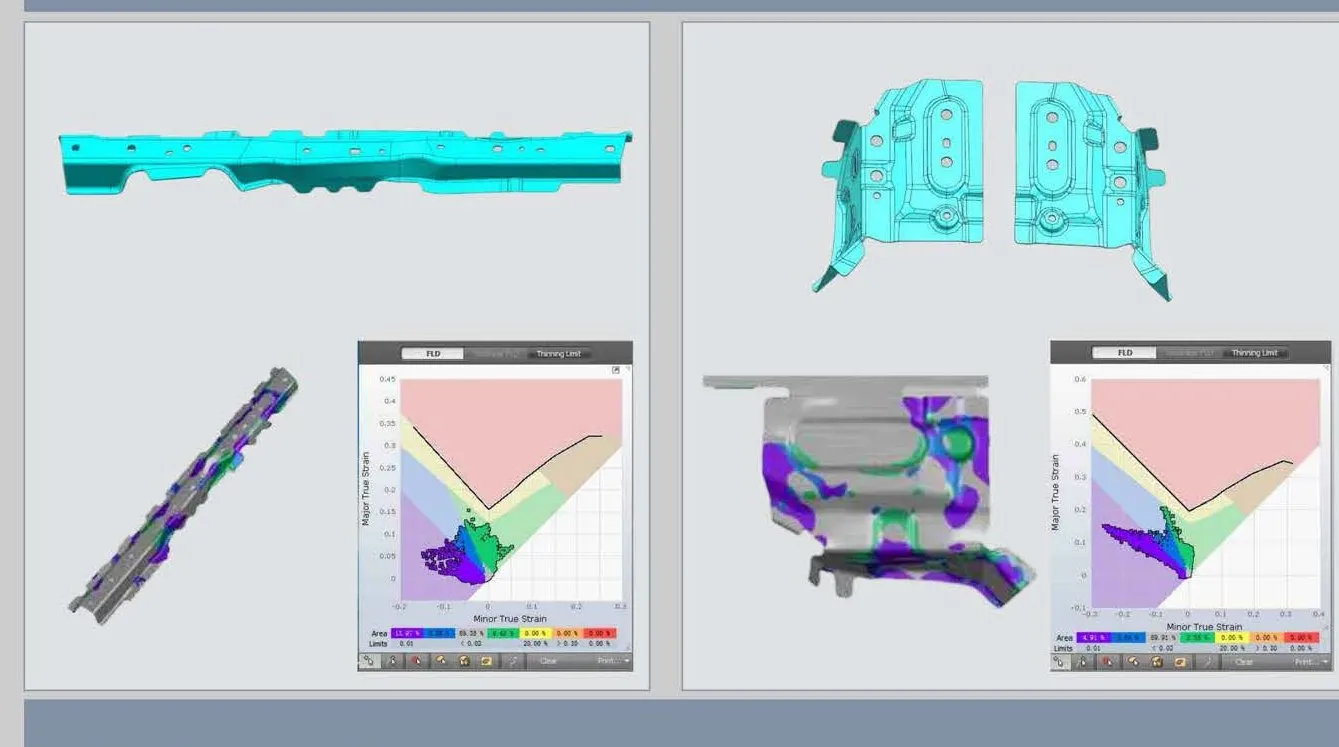
Why simulate the transfer
On a transfer die, the part travels between stations on the press transfer fingers. A finger that hits the die, a part that slips or a motion that is too slow can delay start of production by weeks. Simulating the transfer before the die is built removes that risk.
What we check
- Finger and tooling positions on each part
- Transfer motion between stations
- Interference between fingers, part and die
- Achievable stroke rate
What you receive
A simulation report, and a die design ready for your press and transfer. Send us your press and transfer specifications with your inquiry.
Frequently asked questions
Which data do you need?
Your press and transfer specifications: bed size, stroke, transfer type and motion limits.
A project in mind?
Dies, a turnkey line or series production: tell us about your project and we will get back to you.