
Guides for die buyers and engineers
Practical guides on choosing and sourcing stamping dies and roll forming: transfer or progressive, steel or cast iron, lead times, tryout, high-strength steels.
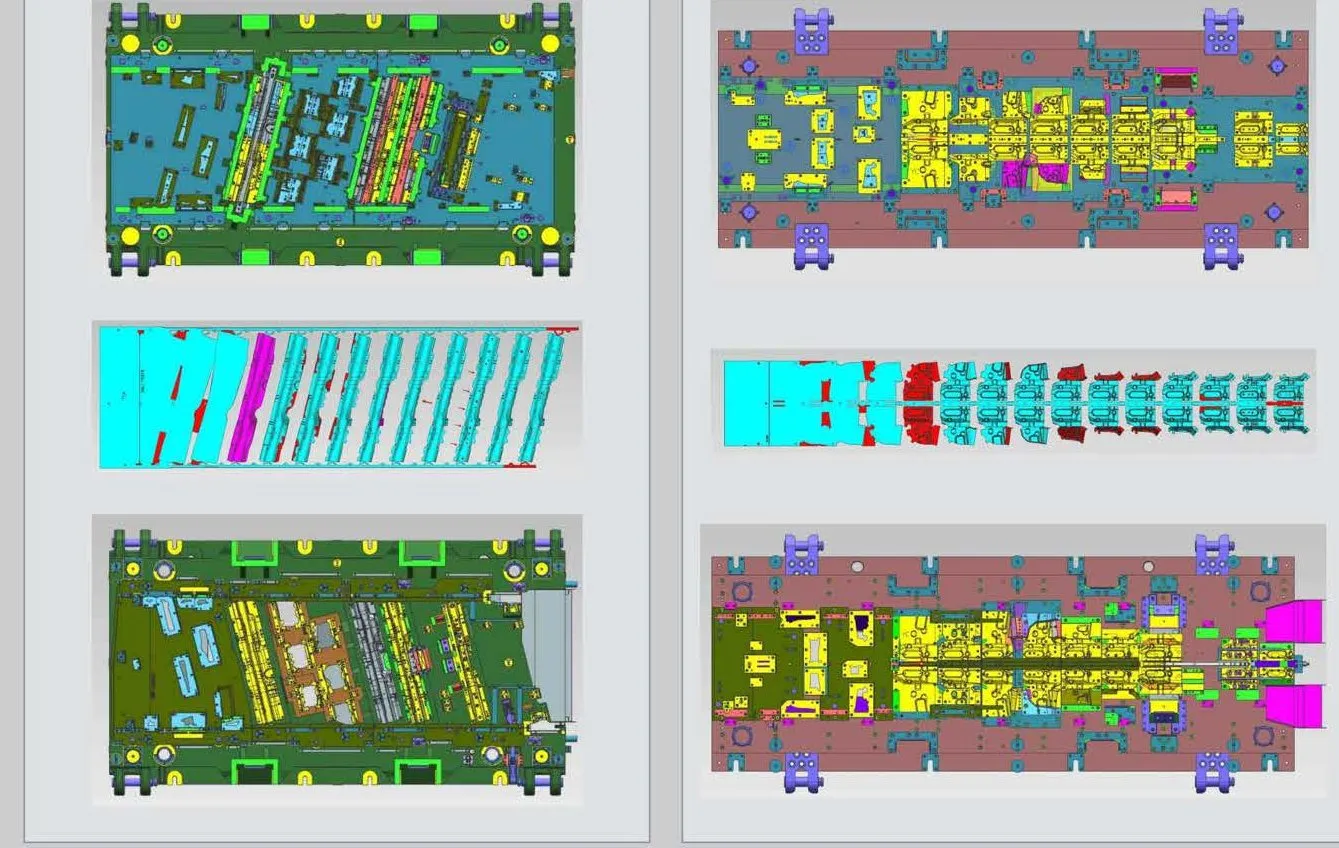
These guides answer the questions buyers and engineers ask us most often when they prepare a tooling project. For a question about your own part, contact us directly.
All guides
Transfer or progressive die?
Part size, depth, volume, material and press line: the criteria that decide between a transfer die, a progressive die and tandem dies.
Steel or cast iron dies?
Why large dies are built on cast iron and smaller ones from tool steel, and what it changes for cost, lead time, rigidity and modifications.
Sourcing dies from China
Communication, time zones, quality, buy-off and modifications once the die is in Europe: the real risks of sourcing dies from China, and how we handle each one.
Die tryout T0, T1, T2
What happens at each tryout loop, what you should receive, how buy-off works and what home-line tryout involves before start of production.
What is a checking fixture?
What a checking fixture is, how it is used at buy-off and in production, and why it should be ordered with the die.
Stamping die lead times
A first die typically takes 4 to 6 months. What drives the lead time, and how parallel work and dedicated designers shorten it.
Roll forming or stamping?
Long constant sections, high-strength steels, volumes: when roll forming beats stamping for automotive parts, and when it does not.
High-strength steels
Advanced and ultra-high-strength steels and press-hardening steels: what changes in die design, simulation and roll forming when parts get stronger.
A project in mind?
Dies, a turnkey line or series production: tell us about your project and we will get back to you.