
Progressive dies for high-volume parts
Progressive dies for high-volume automotive parts fed from coil: brackets, reinforcements, seat and structural components. Strip layout simulated upfront.
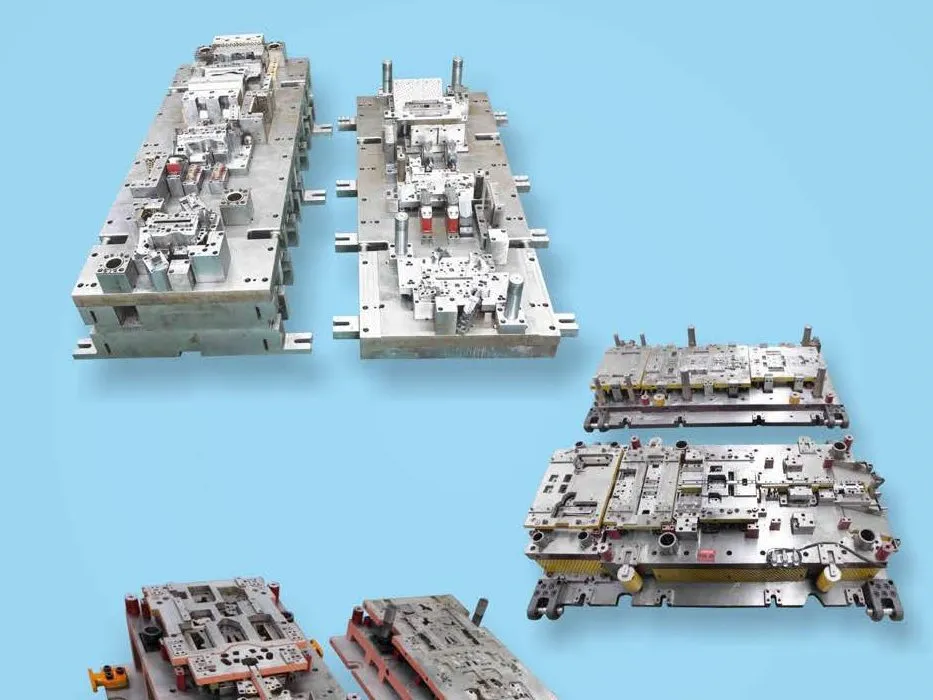
How a progressive die works
A progressive die is fed from coil. At each press stroke the strip advances by one pitch and every station performs one operation: pierce, notch, form, draw, trim. The part stays attached to the carrier strip until the last station cuts it off.
Parts suited to progressive dies
Progressive dies suit small and medium parts made in high volumes: brackets, reinforcements, seat structure and chassis components. They give the highest stroke rate and the lowest part cost once the die runs.
Strip layout and simulation
The strip layout sets the number of stations, the pitch and the material use. We optimise it with forming simulation before the die is designed, to control thinning, springback and material yield.
Construction and tryout
Progressive dies are built in tool steel with hardened inserts and punches, to your die standards. Each die is tried out in our plants and measured until buy-off, and ships with its checking fixture.
Frequently asked questions
Transfer or progressive: which one for my part?
It depends on part size, depth and volume. Send us your part data: we will recommend the die type after a feasibility study.
What coil widths can you try out?
Our coil feeders handle strips up to 1,600 mm wide.
A project in mind?
Dies, a turnkey line or series production: tell us about your project and we will get back to you.